
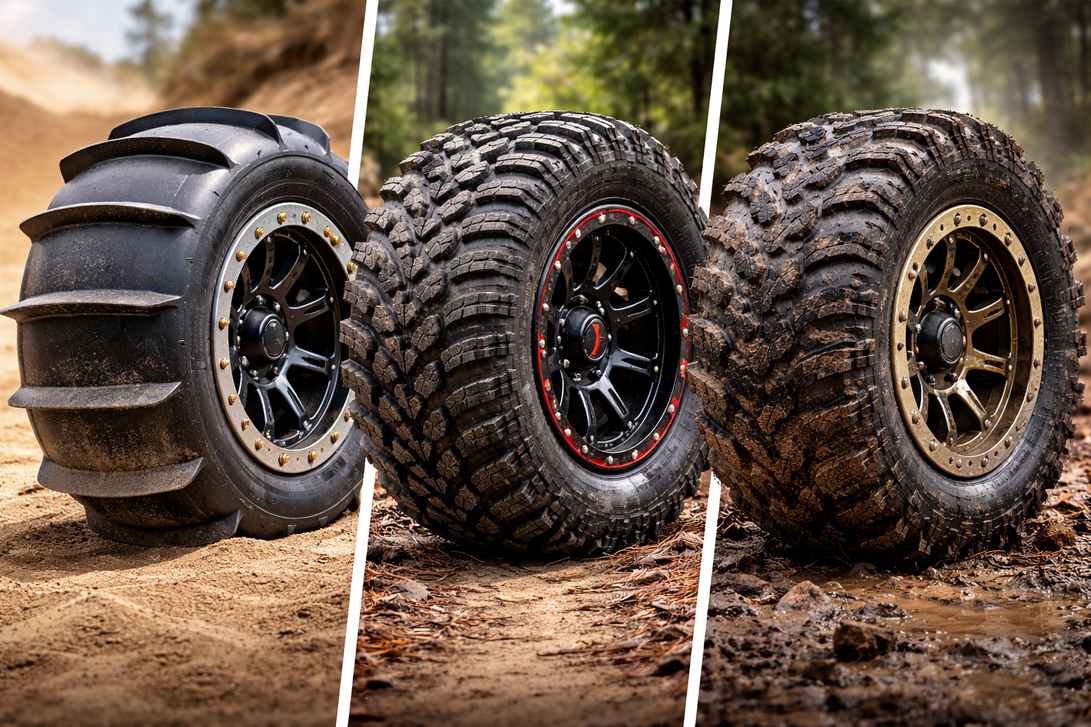
When it comes to upgrading a UTV or side-by-side, few modifications make as much difference as the right wheels and tires. Whether you ride sand dunes, desert trails, rocky mountain terrain, or muddy backcountry, the correct setup can dramatically improve traction, handling, ride comfort, and durability.
Modern sport UTVs and side-by-sides have more power and suspension travel than ever before, which means choosing the right tires and wheels has become even more important for performance.
In this guide, we’ll break down how to pick the best UTV wheels and tires based on riding style and terrain.
Why UTV Tires Matter More Than Most Riders Realize
Your tires are the only thing connecting your side-by-side to the terrain, and the wrong tire setup can reduce performance even on the most capable machine.
The right UTV tire and wheel package can improve:
-
Traction on different terrain types
-
Steering control and stability
-
Acceleration and braking performance
-
Ride comfort over rough terrain
-
Protection against punctures and sidewall damage
Different terrain demands very different tire designs, which is why riders who frequently switch riding environments often keep multiple wheel and tire setups.
Best UTV Tires for Trail Riding
Trail riding is one of the most common forms of off-road driving, especially in wooded areas and mountain terrain.
For trail riding, you want a tire that balances:
-
traction
-
durability
-
ride comfort
Recommended Trail Tire Characteristics
• All-terrain tread pattern
• Medium tread depth
• Reinforced sidewalls
• Balanced weight for steering control
Trail tires are designed to handle a variety of surfaces including dirt, loose gravel, roots, and occasional mud without sacrificing ride quality.
Most trail riders run tires in the 28–30 inch range, depending on suspension setup and clearance.
Pairing these tires with lightweight aluminum UTV wheels helps maintain responsive steering and reduce unsprung weight.
Best UTV Tires for Sand Dunes
Sand dunes require a completely different tire design compared to trail or rock riding.
In sand, flotation is key. The goal is to keep the machine from digging into soft terrain.
Recommended Sand Tire Characteristics
• Paddle tires in the rear
• Lightweight front tires with minimal tread
• Wider tire footprint
• Lightweight wheels
Paddle tires use large scoops to push the machine forward through deep sand, making them the best choice for dune environments.
Most dune riders also choose lighter wheels to improve acceleration and keep the vehicle from bogging down in soft terrain.
Recommended UTV Rear Sand Paddles!
Recommended UTV Front Sand Paddles!
Best UTV Tires for Rock Crawling
Rock crawling requires tires that provide maximum grip and durability when climbing over rocks, ledges, and technical terrain.
Recommended Rock Tire Characteristics
• Soft rubber compound for grip
• Aggressive tread pattern
• Thick sidewalls
• Larger diameter tires
Rock riders often run 30–32 inch tires or larger, which increases ground clearance and allows the tire to conform to obstacles.
Many rock crawlers also prefer beadlock wheels, which clamp the tire bead to the wheel and allow riders to run lower tire pressure without the tire slipping off the rim.
Lower tire pressure improves traction and allows the tire to mold around rocks.
Recommended UTV Dirt and Crawling Tires!
Recommended UTV Dirt and Crawling Wheels!
Best UTV Tires for Mud Riding
Mud riding demands tires that can clear thick mud and maintain forward traction in slippery conditions.
Recommended Mud Tire Characteristics
• Large, aggressive tread lugs
• Deep tread spacing for self-cleaning
• Tall tire height for ground clearance
• Reinforced sidewalls
Mud tires are typically heavier and more aggressive than trail tires, and they are designed to throw mud away from the tread so traction isn’t lost.
Many mud riders prefer tires in the 30–34 inch range, depending on their machine and suspension setup.
Choosing the Right UTV Wheels
While tires get most of the attention, UTV wheels also play a major role in performance and durability.
Key Wheel Considerations
Wheel size
Common UTV wheel sizes include:
-
14 inch wheels
-
15 inch wheels
Larger wheels allow for different tire profiles but may add weight.
Beadlock vs Non-Beadlock
Beadlock wheels clamp the tire bead to the wheel using an outer ring. This allows riders to run lower tire pressures without risking the tire slipping off.
Beadlocks are especially useful for:
-
rock crawling
-
desert racing
-
aggressive off-road riding
Wheel offset
Wheel offset affects:
-
vehicle stance
-
suspension clearance
-
stability
Wider offsets increase stability but may place more stress on suspension components.
Wheel and Tire Packages: The Best Upgrade for Many Riders
One of the easiest upgrades for a UTV is installing a complete wheel and tire package.
Pre-mounted packages offer several advantages:
-
Perfect tire-to-wheel fitment
-
Easier installation
-
Balanced performance
-
Often better pricing than buying separately
Many riders keep multiple setups depending on their riding locations, such as a trail tire set and a sand tire set.
Final Thoughts
Choosing the right UTV wheels and tires depends heavily on where and how you ride.
Trail riders, dune riders, rock crawlers, and mud enthusiasts all require different tire designs to get the best performance from their machines.
With the right setup, you can dramatically improve your side-by-side’s traction, stability, and off-road capability, turning a good ride into an incredible one.
If you're considering upgrading your UTV wheels and tires, taking the time to match your setup to your riding style will make a noticeable difference every time you hit the trail.